Manayunk

Manayunk: Then + Now

Manayunk History

Originally referred to as the town of Flat Rock, Manayunk received its iconic name at a town council meeting on May 4, 1824. The residents chose the name from the Lenape Indian word for the Schuylkill River “manaiung” which literally translates to “place to drink” in English.

Manchester of America

Though European colonists had settled in the area as early as the 1700s, the town started to boom with the completion of the Manayunk Canal in 1823. The canal served as a vital link between the coal-rich regions above Reading, PA and Philadelphia’s thriving ports along the Delaware River. This led to the construction of numerous textile mills along what is now the Main Street commercial corridor, and eventually transformed the neighborhood into one of the most prominent manufacturing villages in the United States at that time — so much so that Manayunk became known as the “Manchester of America.”

Manayunk's Revitalization

Manayunk became a part of the City of Philadelphia in 1854 while still maintaining its own identity. Working-class immigrants of German, Irish, Italian, and Polish descent flocked to the neighborhood in search of work and housing. As a result, each of these groups founded their own Catholic churches along Manayunk’s hillside.

Throughout the 20th century, the neighborhood’s reputation as a manufacturing haven drastically changed as Manayunk’s revitalization efforts began. Vacant storefronts and mill buildings became the locations of new restaurants and retail stores. Today, Manayunk is home to a wide variety of options for dining, shopping, working out, and living!

Current Projects

Following a 2015 streetscape study with the Philadelphia Department of Commerce, MDC has been working to bring enhancements like lighting, crosswalks, and bike corrals to life through ongoing funding efforts.

Pedestrian Lighting

Strategically placed every 55 feet, new pedestrian lights will improve visibility and guide cyclists toward the Towpath, with final placement determined by the Streets Department.

Crosswalks

To improve safety, existing decorative murals will be replaced with standard, more visible crosswalks that meet city guidelines and ensure better pedestrian access.

Manayunk Schuylkill Canal

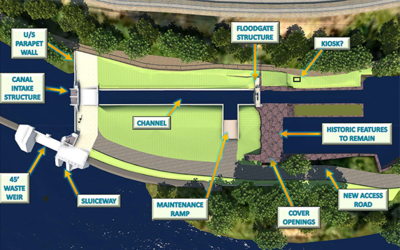
The Philadelphia Water Department (PWD) is in the process of connecting the Manayunk Canal back to the Schuylkill River with the mission to improve the water quality in the canal.

The Manayunk Canal was constructed as part of the larger Schuylkill River Navigation System to connect the Flat Rock and Fairmount Pools. The gates were manually operated and regular dredging was performed to maintain navigability. The Manayunk Canal ceased operations in the 1940s. With that came the removal of the lock gates and dredging was discontinued.

Today, the Manayunk Canal has no connection to the river. The canal is stagnant, which leads to algae blooms and the occasional fish kills. Sediment has accumulated upstream of the Feeder Structure further disconnecting the river and the canal, and the upstream area collects significant amounts of trash and debris.

PWD has looked for sustainable ways to reconnect the canal to the river. To be sustainable, the solution must provide for:

  • Flow Control (Normal Operations and Flood Control) using manually operated gates
  • Debris collection and removal
  • Sediment management and removal
  • Regular inspections and maintenance

PWD has identified accessibility to be the biggest key to achieving sustainability. In order to do this, PWD will construct a new diversion facility upstream to the Feeder Structure to regulate flow and manage sediment.

Wissahickon Gateway

The Philadelphia City Planning Commission is in the process of redoing the Wissahickon Gateway, an entrance to Manayunk from the eastern neighborhoods of Philadelphia. The plan will position the Wissahickon Gateway as a transit-focused neighborhood center that creates strong, safe connections between East Falls, Manayunk, Roxborough, the Wissahickon Valley Park, and the Schuylkill Waterfront. Based on a recent study, the Wissahickon Gateway will serve as an anchor for new shops, housing, public transportation service, and recreational trails.

  • Formal plaza with prominent architectural features incorporated into a headhouse building, signage, and waiting area canopies
  • Dedicated traffic light left turn lane
  • Temporary bicycle and pedestrian path along Ridge Avenue (until train is completed)
  • Dedicated land for Schuylkill River Trail extension with connection to the new WTC
  • Reuse of existing transportation center for trailhead and comfort station
  • Driveway consolidation

Subscribe to our Newsletter

Subscribe to our newsletter to stay in the loop with the latest updates, tips, and exclusive content. Don’t miss out—join our community today!


By clicking Submit, you consent to receive email communications from Manayunk.com